
Actinic Keratosis
Rough, scaly patches from years of Idaho sun exposure deserve an expert look. Our board-certified dermatologists can identify and treat actinic keratosis before it progresses.

That Rough Patch on Your Skin Might Be More Than Dry Skin
You've tried lotion. You've tried exfoliating. But that rough, sandpaper-like patch on your forehead, ears, or the back of your hands just won't smooth out. If you've spent years hiking the Foothills, boating on Lucky Peak, or skiing at Bogus Basin, that persistent rough spot may be actinic keratosis, a common skin change caused by cumulative sun exposure.
Idaho's high-altitude sun delivers more UV exposure than many people realize, even on cool or cloudy days. Many patients across Boise, Meridian, and the surrounding Treasure Valley notice these patches appearing in their 40s, 50s, and beyond, especially on sun-exposed areas like the scalp, face, ears, and forearms. The good news is that actinic keratosis is very treatable, and catching it early is straightforward with the right care team.
What Is Actinic Keratosis?
Actinic keratosis, sometimes called AK or a sun spot, is a rough, scaly patch of skin that develops from years of cumulative ultraviolet exposure. It is considered a precancerous skin change, meaning it can, in a small percentage of cases, progress to squamous cell carcinoma if left untreated.
- Often appears as a dry, rough, or scaly patch that feels different from the surrounding skin
- Common colors include pink, red, brown, or skin-toned
- Frequently found on the face, ears, scalp, neck, forearms, and back of the hands
- More common in fair-skinned individuals and those with significant lifetime sun exposure
- May feel tender, itchy, or slightly raised to the touch
- Can appear as a single spot or multiple patches in sun-exposed areas
What to Expect at Your Visit
Dr. Portela, Dr. Ferrell, or Dr. Buttars will begin with a thorough skin examination to evaluate the spot and check for any other areas of concern. Treatment is typically quick and well-tolerated, with most options completed right in the office.
- Evaluation: A visual and dermatoscopic examination to confirm the diagnosis, sometimes paired with a biopsy if the spot looks atypical
- Cryotherapy: Many spots are treated with liquid nitrogen in just a few seconds per lesion, with minimal discomfort during the visit
- Topical therapy: For patients with multiple areas of sun damage, a prescription cream may be recommended to treat a broader field of skin over several weeks
- Photodynamic therapy: A light-activated treatment option for more widespread actinic damage
- Downtime: Cryotherapy may cause mild redness, swelling, or blistering for several days as the treated area heals
- Follow-up: Your provider will discuss a plan for ongoing skin checks based on how many spots you have and your personal risk factors
What Results Typically Look Like
Most treated spots resolve within a few weeks as the skin heals and sheds the treated tissue. Many patients find that treatment is quick, well-tolerated, and easy to fit into a busy schedule.
- Cryotherapy sites often heal within one to two weeks
- Topical treatments may cause temporary redness or peeling as they work over several weeks
- New spots can develop over time due to ongoing sun exposure, so periodic skin checks are recommended
- Consistent sun protection can help reduce the likelihood of new actinic keratosis forming
- Your care plan will be tailored to how many spots are present and your overall skin cancer risk
Who Should Consider an Evaluation
Actinic keratosis becomes more common with age and cumulative sun exposure, but anyone who spends time outdoors in the Treasure Valley can develop it.
- Adults over 40 with a history of significant sun exposure or outdoor recreation
- Fair-skinned individuals, or those who sunburn easily
- Anyone with a rough, scaly, or persistent patch that hasn't resolved with moisturizer
- Patients with a personal or family history of skin cancer
- Those who have spent years hiking, boating, farming, or working outdoors in Idaho's high-altitude sun
- Anyone due for a routine skin cancer screening who hasn't seen a dermatologist recently
Frequently Asked Questions
Is actinic keratosis the same thing as skin cancer?
No, actinic keratosis is considered precancerous, meaning it is not cancer itself but can potentially progress to squamous cell carcinoma in a small percentage of untreated cases. This is why our physicians recommend evaluating and treating these spots rather than waiting to see if they change.
Does treatment hurt?
Most treatments, including cryotherapy, are well-tolerated and cause only brief, minimal discomfort during the procedure. Topical treatments may cause some redness or irritation over the following days as they work.
How many treatments will I need?
Many single spots resolve after one cryotherapy treatment, while widespread sun damage treated with topical medication may require several weeks of application. Dr. Portela, Dr. Ferrell, or Dr. Buttars will outline a specific care plan based on what they find during your exam.
Can actinic keratosis come back?
New spots can develop over time, especially with continued sun exposure, which is why ongoing skin checks are recommended. Consistent use of sunscreen and protective clothing can help reduce your risk of new spots forming.
Do I need a referral to be seen?
No referral is needed. You can schedule directly with Treasure Valley Dermatology at either our Boise or Meridian location for an evaluation.
Why Choose Treasure Valley Dermatology
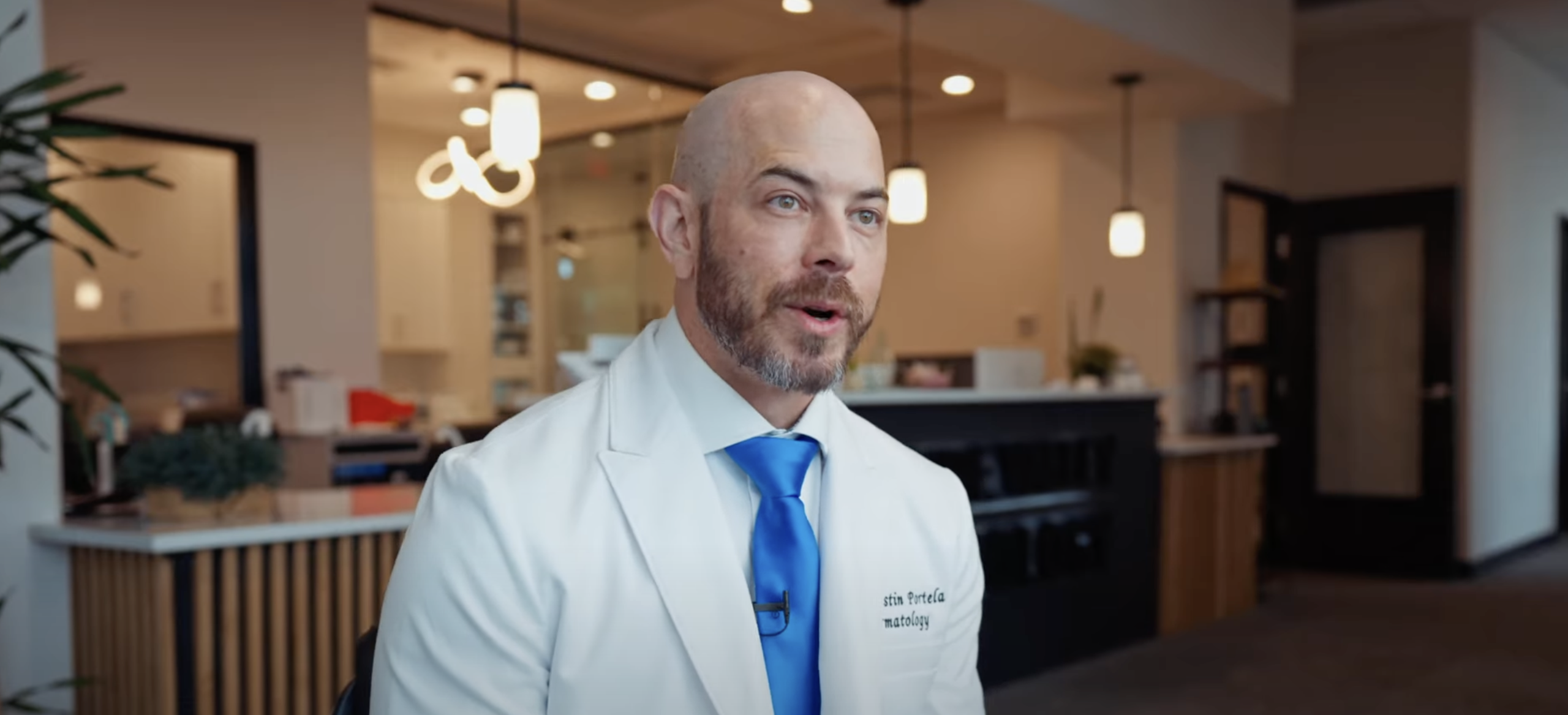
Actinic keratosis needs an experienced eye, and Treasure Valley Dermatology is home to three board-certified dermatologists, Dr. Dustin Portela, Dr. Kelsey Ferrell, and Dr. Ben Buttars, experts in skin cancer surgery who understand precancerous and cancerous skin changes at the highest clinical level, and Dr. Ferrell is a fellowship-trained Mohs surgeon. This expertise is rare in the Treasure Valley and means your evaluation is backed by surgical-level training, even for something as common as a sun spot.
- Board-certified dermatologists and experts in skin cancer surgery under one roof, including fellowship-trained Mohs surgeon Dr. Ferrell
- Dr. Portela, an Idaho native and board-certified dermatologic surgeon, brings deep familiarity with the Treasure Valley's outdoor lifestyle and sun exposure patterns
- Dr. Ferrell, a Boise State University graduate, is known for taking time to genuinely listen and explain findings clearly
- Dr. Ben Buttars, DO, board-certified dermatologist and Idaho native
- 700+ five-star reviews reflect a practice culture where patients feel heard, not rushed
- Full-family dermatology care, from teenagers to grandparents, at both our Boise and Meridian locations
- On-site access to phototherapy, biopsy services, and comprehensive skin cancer screening in one visit
Schedule Your Skin Evaluation Today
If you've noticed a rough or scaly patch that won't go away, don't wait to have it looked at. Dr. Portela, Dr. Ferrell, Dr. Buttars, and the team at Treasure Valley Dermatology are ready to give you a clear answer and a straightforward care plan at our Boise or Meridian office.
Visit dermatologyboise.com/schedule-an-appointment to book your visit today. Your skin deserves an expert, caring look, and we're here to provide it.
Boise's skin experts
We specialize in treating both children and adults with both common and uncommon skin problems. We treat acne, warts, hair loss, eczema, skin cancer, itchy skin, perform skin checks, have a comprehensive skin cancer prevention system and offer many more services.