You finally got around to having one skin tag removed, and six months later there are three more in the same general area. If this sounds familiar, you're not imagining a pattern — skin tags genuinely do tend to show up in clusters, and certain parts of the body are far more prone to growing new ones than others.
Skin tags (acrochordons, if you want the clinical term) are small, soft, skin-colored growths that typically form where skin rubs against skin or against clothing — the neck, armpits, eyelids, groin folds, and under the breasts are the usual hot spots. They're harmless, but their tendency to multiply is a real physiological pattern, not bad luck.
Why They Cluster Instead of Appearing One at a Time
Friction is the biggest driver. Repeated skin-on-skin rubbing irritates the area, and that irritation seems to encourage new tags to form nearby — which is why they so often appear in small groups rather than as isolated spots. Weight gain, pregnancy, and hormonal shifts also play a role, since all three increase skin folds and friction points. There's a genetic component too: if a parent or sibling tends to develop skin tags, you're more likely to as well.
Insulin resistance and type 2 diabetes are also strongly associated with skin tag development, particularly when many tags appear at once in a short window. If you're noticing a sudden increase in skin tags along with other changes — unusual fatigue, increased thirst, or darkened skin in body folds — it's worth mentioning to your dermatologist or primary care provider, since skin tags can occasionally be an early visual cue of a metabolic issue worth screening for.
How Fast Do Skin Tags Grow?
Most skin tags grow slowly, reaching their final size — usually a few millimeters, though some grow larger — over weeks to months, then they simply stop. They don't tend to grow rapidly, and a tag that's changing quickly, bleeding, or looks irregular should be evaluated rather than assumed to be a typical skin tag. We cover how to tell the difference in more detail in our guide on mole vs. skin tag identification, since the two are frequently confused and benefit from different removal approaches.
Do Skin Tags Grow Back After Removal?
This is the question we hear most, and the honest answer is: the exact tag that's removed does not grow back. Once it's removed, that tissue is gone for good. What patients are actually experiencing when it "seems" like regrowth is almost always a new tag forming nearby, in the same friction-prone area — which, given everything above about clustering, makes a lot of sense. If your neck or underarms are a reliable spot for friction and skin folds, that area is simply primed to keep producing new tags over time, regardless of how many previous ones were removed.
What Removal Actually Costs
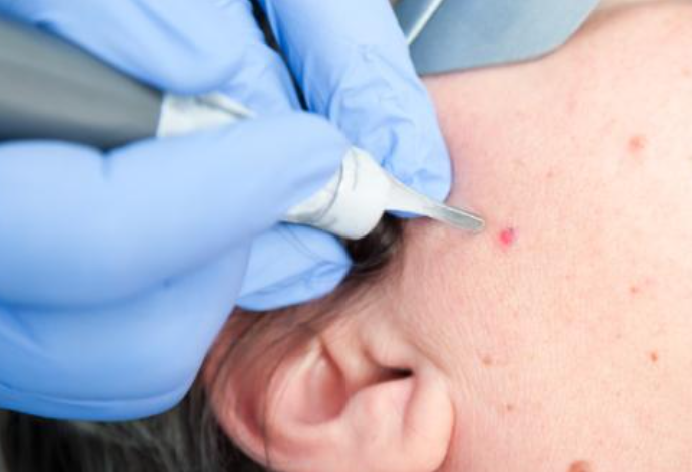
Skin tag removal cost depends on how many tags are being treated, their size and location, and the removal method used. A single small tag removed during an unrelated visit is often a quick, low-cost add-on, while clearing a larger cluster — say, a dozen tags across the neck and underarms — involves more time and is priced accordingly. Because skin tag removal is typically considered cosmetic rather than medically necessary, it's usually not covered by insurance, which is why getting an accurate quote during consultation matters more than a generic number online. Options range from simple snip excision to cautery or cryotherapy, and the right method depends on tag size, number, and location — something we walk through during a visit rather than guessing over the phone.
At Treasure Valley Dermatology, we see this exact pattern constantly across our Meridian and Boise patients: someone comes in for one bothersome tag and leaves with a clear plan for the handful of smaller ones nearby, often treated in the same visit. Our team has removed thousands of skin tags, and we're upfront about what's truly a tag versus something that deserves a closer look, like a seborrheic keratosis or an atypical mole.
If skin tags keep appearing faster than you can keep up with, the most efficient approach is usually a single visit to clear the current batch rather than treating them one at a time as they show up. Learn more about our skin tag removal options or explore combined skin tag and age spot removal if you're dealing with both at once — a common combination as skin ages and accumulates years of sun exposure across the Treasure Valley.
Ready to finally get ahead of it? Schedule a skin tag evaluation at our Meridian or Boise office, and we'll map out exactly what's there, what it will cost to clear, and what — if anything — is driving the pattern.