Every September, Treasure Valley Dermatology sees the same pattern: patients come in worried because a mole they've had for years suddenly looks darker, bigger, or "different" after a summer of hiking, boating, and yard work along the Boise River or out at Lucky Peak. Most of the time, it's simple sun-induced pigmentation change. But sometimes it's the first sign of something that needs a closer look.
Here are the four changes in moles that actually warrant attention after a summer of sun exposure, plus honest answers to a few of the odd but common questions patients bring up — like whether having 7 moles clustered together means anything, or whether 3 moles in a row on an arm or leg is a warning sign.
Why Moles Look Different After Summer
Idaho's elevation means UV exposure is more intense here than at sea level, and most people simply get more sun hours in summer — on the lake, the golf course, or the trail. Existing moles contain melanocytes, the same pigment-producing cells that tan the rest of your skin, so it's genuinely common for a mole to look a shade or two darker in September than it did in May. That alone isn't usually cause for alarm. If you're not already using a daily, broad-spectrum sunscreen, our dermatologist-approved sunscreen guide for Idaho's outdoor lifestyle is a good place to start, and our piece on skin cancer risk at Boise's elevation explains why local UV exposure adds up faster than people expect.
What matters is the pattern of the change, not just the fact that a change occurred. That's where the ABCDE framework still holds up.
The 4 Changes That Actually Need Attention
- Uneven darkening within a single mole. A mole that tans evenly, all the way through, is less concerning than one where part of it turns noticeably darker (or black) while the rest stays the same color. Uneven, patchy darkening is one of the clearest post-summer red flags.
- A change in border or shape. Moles that were once round or oval and now look notched, scalloped, or smeared at the edges deserve a professional look — especially if the change happened over just a few months.
- Growth in size or height. A mole that's grown wider than a pencil eraser (about 6mm), or one that's become raised or bumpy when it used to be flat, should be evaluated.
- Itching, bleeding, or crusting. Moles aren't supposed to itch, bleed, or scab over without an obvious injury. This symptom alone is enough reason to schedule a visit, regardless of how the mole looks.
If you're unsure whether what you're looking at is even a mole, our guide on mole vs. skin tag breaks down the visual differences patients often confuse.
Does It Matter If You Have 7 Moles or 3 Moles in a Row?
We hear versions of this question constantly: "I counted 7 moles on my back — is that too many?" or "I have 3 moles in a row on my forearm, does that pattern mean something?" The honest answer is that the number of moles you have, or whether they happen to line up in a row or cluster, isn't itself a warning sign. Plenty of people have dozens of moles their entire lives without issue, and plenty of concerning moles show up alone, with no pattern at all.
What dermatologists actually look for is whether one mole stands out from the rest — the "ugly duckling" sign. If you have 20 moles and 19 of them look similar while one looks different in color, shape, or texture, that outlier is worth evaluating far more than the total count. The same goes for moles in a row: three moles lined up along a vein or crease is usually coincidental anatomy, not a medical pattern. The exception is if one of those three has changed on its own using the criteria above — in that case, it's the individual mole that matters, not its neighbors.
People with a higher number of moles overall (typically defined as 50 or more) do have a modestly higher lifetime risk of melanoma, which is a good reason to get annual skin checks — not a reason to panic over a cluster you can count on one hand.
When to See a Dermatologist for a Mole
A good rule of thumb for when to see a dermatologist for a mole: if you find yourself re-checking a mole in the mirror more than once over a couple of weeks because something about it seems off, that instinct is worth listening to. Specifically, book an appointment if you notice:
- Any of the four changes listed above
- A new mole appearing after age 30, particularly one that looks different from your other moles
- A mole that's changed noticeably within a few months rather than gradually over years
- A family history of melanoma combined with any mole you're unsure about
Outdoor workers and avid hikers, cyclists, and anglers in the Treasure Valley carry extra risk simply from cumulative sun exposure — our article on melanoma risk for Idaho outdoor workers covers why this population should be especially proactive about checks. And if it's simply been a while since your last full-body exam, our guide on how often adults should get a skin check can help you figure out the right interval for your risk level.
What Happens at a Mole Evaluation
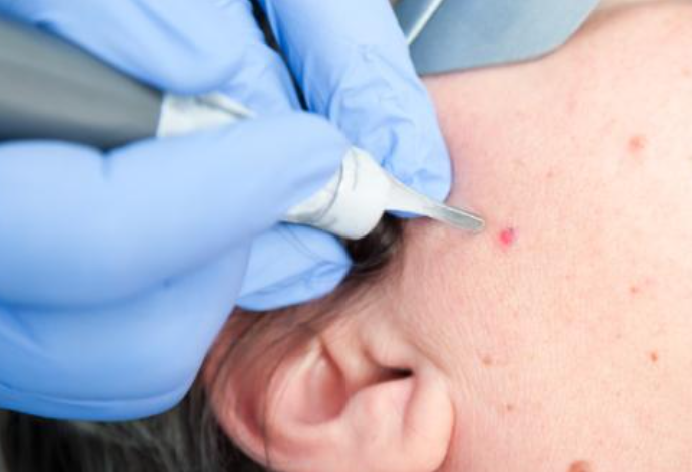
At Treasure Valley Dermatology, a mole concern typically starts with a skin cancer screening, where Dr. Portela, Dr. Ferrell, or Dr. Butters examines the mole in question along with the rest of your skin using dermoscopy. If a mole looks atypical but not clearly concerning, it may simply be monitored with photography and reassessed at your next visit — this is standard for what we classify as atypical moles. If a mole shows features that warrant tissue sampling, a quick in-office biopsy settles the question definitively, and if removal is appropriate, our mole removal service handles it efficiently with minimal scarring. In the rare case a biopsy comes back as skin cancer, our team — including fellowship-trained Mohs surgeons — provides melanoma treatment and surgical care without you needing to be referred elsewhere.
Darkened moles after summer are usually nothing more than a seasonal pigment shift. But the only way to know for certain is to have the right eyes on it. If a mole on your skin has you double-checking it in the mirror, that's reason enough to schedule a visit at our Meridian or Boise office — not because every darker mole is dangerous, but because peace of mind (or early treatment, if needed) is always worth five minutes in the exam chair.