If you've ever pressed a finger against a sore red bump on your jawline or chin and felt pain radiating under the skin — with nothing to pop, nothing to drain, nothing to show for it except more redness — you've met a blind pimple. Patients in our Meridian and Boise offices describe it the same way almost every time: "It hurts before I can even see it." That's not your imagination, and it's not a sign you're doing something wrong with your skincare. It's a specific type of acne lesion, and it behaves very differently than a typical whitehead.
**What makes a blind pimple different**
Most pimples form near the surface, where a clogged pore eventually pushes contents up and out. A blind pimple forms deeper in the dermis, below the layers where a visible head can develop. The clog — a mix of oil, dead skin cells, and bacteria — gets trapped lower in the follicle, and the body responds with inflammation to wall it off. That inflammatory response is exactly why it hurts. You're not feeling the clog itself; you're feeling swollen, irritated tissue and the pressure it puts on surrounding nerve endings.
Because there's no surface opening, blind pimples tend to:
- Feel like a hard, tender knot under otherwise normal-looking skin
- Take days to a week or more to resolve on their own
- Show up repeatedly in the same spot (jawline, chin, and lower cheeks are the most common locations)
- Leave behind a dark mark or, in some cases, a scar if picked at
That last point is the real risk. Squeezing or digging at a blind pimple doesn't release pressure the way it does with a surface whitehead — it just pushes inflammation deeper and increases the odds of permanent scarring.
**Why these show up along the jawline so often**
A large number of patients who come in with recurring blind pimples around the jaw and chin are dealing with a hormonal component to their acne. Hormonal fluctuations increase oil production and change how the skin responds to normal bacteria, which is part of why these lesions cluster in that lower-face zone and why they tend to flare around monthly cycles, stress spikes, or periods of hormonal change. We've written in more depth about this pattern in cystic acne along the jawline, which covers why this particular type of breakout keeps returning even when the rest of the face stays relatively clear.
**Why at-home extraction almost never works — and often makes it worse**
We understand the impulse. A painful bump under the skin feels like it needs to come out. But because blind pimples sit deeper than a standard comedone, there's genuinely nothing to extract at the surface. Attempting to do so typically:
- Ruptures the follicle wall internally, spreading bacteria into surrounding tissue
- Intensifies inflammation, making the bump larger and more painful
- Increases the likelihood of post-inflammatory hyperpigmentation or a permanent scar
- Delays healing by days
If a bump is large, deep, and doesn't resolve within a week, that's the point where it's worth having it looked at rather than waiting it out or trying to manage it alone.
**How dermatologists actually treat large, painful pimples under the skin**
In-office treatment for a blind pimple is a different process than anything you can do with a sterilized needle at the bathroom sink. Depending on the size and depth of the lesion, our providers may use:
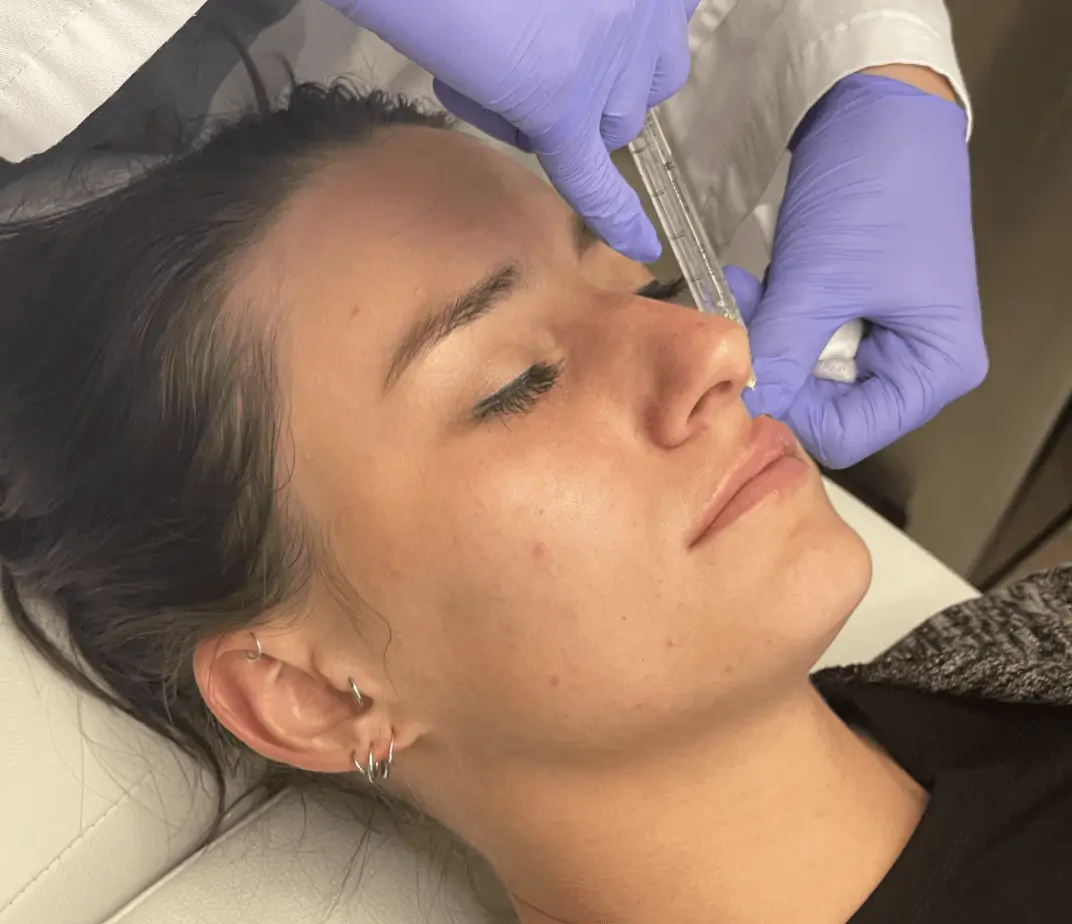
- **A cortisone injection** — a small amount of diluted corticosteroid injected directly into the lesion, which reduces inflammation and often visibly shrinks the bump within 24 to 48 hours. This is the fastest, safest way to resolve a large, deep pimple before an event or simply to stop the pain.
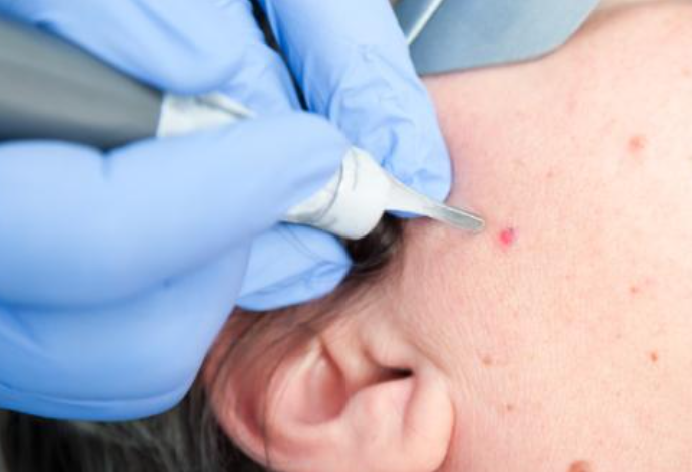
- **In-office extraction** — performed with sterile technique once a lesion has matured enough to be safely drained, minimizing trauma to surrounding tissue.
- **Prescription-strength topical or oral treatment** — for patients who get blind pimples repeatedly rather than as an isolated event, addressing the underlying acne pattern matters more than treating each individual bump. This might mean topical retinoids, oral antibiotics, hormonal therapy, or isotretinoin for persistent, severe cases. Our guide on prescription acne medications that actually clear adult skin walks through how these options are chosen.
For patients whose breakouts are hormonally driven and cyclical, treatment often extends beyond spot-treating individual pimples. We'll talk through options that address the root cause rather than managing flares one at a time.
**When it's not acne at all**
Occasionally, a firm, painful bump under the skin that doesn't behave like typical acne — one that's been present for weeks, keeps refilling after drainage, or sits in an unusual location — turns out to be something else entirely, like an inflamed sebaceous cyst. The distinction matters because the treatment approach is different, and it's part of why a proper evaluation is worth the appointment rather than guessing based on symptoms alone.
**What actually helps between now and your appointment**
While you wait to be seen, a warm compress applied for 10–15 minutes a few times a day can help ease discomfort and may encourage the lesion to resolve faster. Avoid picking, squeezing, or applying harsh spot treatments repeatedly to the same area, which can irritate already-inflamed skin. If you're prone to repeat breakouts in the same spot, it's worth mentioning your full history at your visit — including how often this happens and whether it tracks with your cycle, stress, or diet — so your provider can treat the pattern, not just the current bump.
**If painful breakouts keep coming back**
One blind pimple is an annoyance. A recurring pattern of them is a sign that your acne needs a real treatment plan rather than repeated damage control. Dr. Portela, Dr. Ferrell, and Dr. Butters see this exact scenario regularly across both our Meridian and Boise offices, and getting ahead of the hormonal or bacterial drivers behind it is almost always more effective — and gentler on your skin long-term — than treating each new bump as it appears.
If you're dealing with a painful pimple under the skin right now, or you're tired of the same spot flaring every few weeks, our team can get you evaluated quickly and start a plan that actually addresses why it keeps happening.